quarta-feira, 22 de junho de 2016

How can you rehearse something new?


 Listening and investigating and trying to find new ways of learning about the beautiful game, i end up catching key words that.. somehow does not seem right.

- Rehearse how you want to play, for example, is something that... conceptually is not wrong. You should practice the way you play. The behaviors you want to see in the game, should be in practice as well.

But then.. you listen to people saying that they should rehearse the movements so many times that it became automatic, like brushing your teeth. Something you do, without thinking about it...

And that is where something starts to "stink". The game, the game that is played now, and the game that will be played in the future, is about decisions. Conscience decisions. So... how can someone think about robotics when everything is being created?

And then... i stopped listening to the "how we want to play" and investigated "how do we get there" as in... what do they do in practice.

And all i saw, was rehearsal, rehearsal, rehearsal. How can you play aganist ghosts, and learn anything about the game? How could Argentina, in the video, learn that the best way to solve that problem would be to keep the ball inside, and play to the ones that were free... if they would rehearse all the plays the coach imagined, time and time again?

Many people have good ideas about the game. But less and less people know how to take those ideas to the pitch, and help the players to learn those ideas in a way that makes them create the ideas over and over again, without the coach having the ps4 controller on the sides.

domingo, 19 de junho de 2016

Change the rules to save the game

During this Euro2016 and Copa America Centenario, we have been watching a lot of players and nations under perform.

There are many reasons for that. Its known that the time to practice and to properly engage in a game model is long, and it takes even more time when the ideas the National Team Coach has, are different from the ideas of the clubs.

Players get together from different places, and all of a sudden, they need to perform like they think as one.  It is really hard to achieve.

And it is much harder, when most of the time, instead of getting knew game principles, instead of adapting to the ideas of the national team, time is used to recovering players from fatigue and from long term injuries.

Everyone wants to see the best players play at their best. Everyone wants to see quality football, but is that really possible when during 10 months the best players and the best teams play every 3 days? The demand on players from the bigger clubs, that are in the last stages of every competition is huge, and something needs to be done to reduce that demand to try to keep the players in the best condition possible, for as much time as possible.

One o
f the rules that could help, would be to have 4, or even 5 subs during the game. Limit the amount of times a team could sub (for example, 2 times during the
second half) and would really help improving the show in a long term. Having fewer players play 90 minutes, would create the opportunity of more players showing their skills, and would raise the level of performance by having more players close to 100% of their ability for a longer period of time.

To have better quality in summer tournaments, players need to arrive at those competitions in better conditions.

sábado, 26 de dezembro de 2015

Ozil vs Silva. Is this Germany vs Spain?

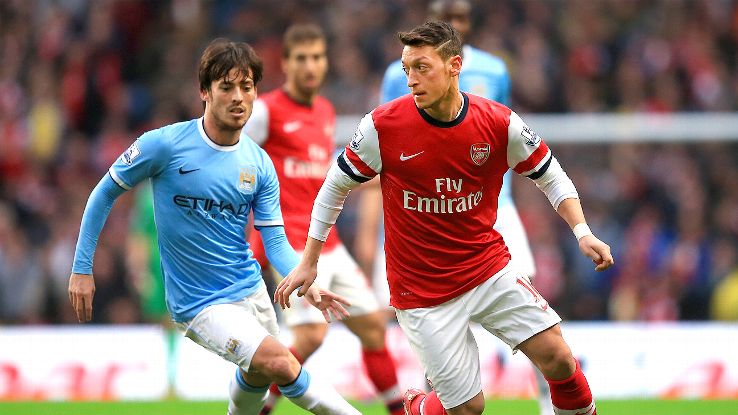
When Henry speaks, we listen. Do not always agree with Carragher, but i do this time. Do you think the differences between this two amazing players can also be the difference between this two great nations of today Football?


Is Spain all about mobility and being everywhere and involved in the game, and Germany, also with great positional offensive capacity, but more with this quarterback style of creating goal chances?


.
.


quarta-feira, 23 de dezembro de 2015

Ozil - Assist King


"He sees things that no one else can see"

"He is special"

Yes, he is, and yes, he can. But Ozil (and many others) are still Humans, like you and me. There is not any supernatural thing going on, no x-files, no magic, no nothing of that sort.

What makes the difference, and what makes Ozil special, is the understanding of the game. Its the intelligence he shows on every decision.

Knowing his teammates, knowing the opponent, and having so much experience, helps predicting what is going to happen next. He is able to predict what is going to happen and act accordingly to his predictions.

Its 3534535358723057897230985725 hours of not being trapped with rules that castrate this kind of options. Being free to pass to whoever he wants, to touch the ball as many times as he wants, to explore the game without being afraid to make mistakes.

Is making lots of mistakes, but being aware of them, and learning from them. I
ts trying again, but just a little bit different.. just to see if this time he can do it.

Its having the relationship with the ball so good, that he is able to interact with the game and turning into actions what he feels he should do at that moment. Its being able to put intentions into practice.

He does not even realize it, and may call it instinct .. but its avaluating the game and interacting with it based on that avaluation.


terça-feira, 1 de dezembro de 2015

Game model - Step by step

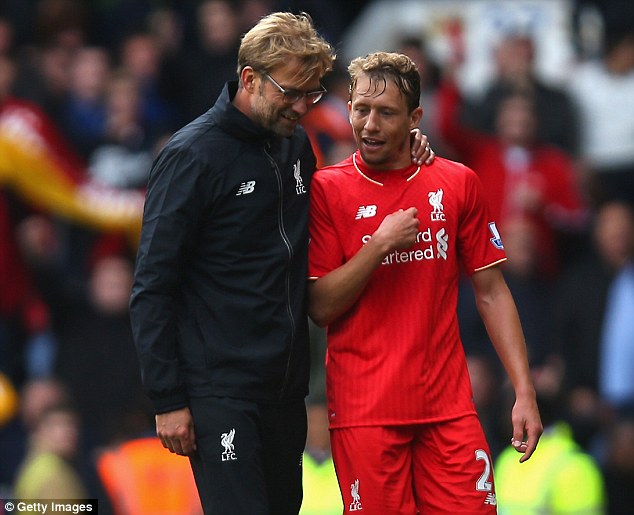
From Klopp,

"Maybe we could have done better so far, but it is OK. We are not even halfway into the season. We have not had a long time together," Klopp said.
"I think we are giving the players as much information as we can. Every day, if I tell them all things I know, for sure it would be too much. It is all about timing. The right amount of information is very important.
"We don't want them going on to the pitch with their papers thinking, 'What is point three?' We are just looking for the next step.

Read more at http://www.fourfourtwo.com/news/klopp-cant-forget-fing-palace-loss#BsVeBCESTgVCt5gf.99


It does not matter if you are teaching grown ups, or children. Coaching is always a challenge, you know so much things, you imagine your players playing in a high level and.. we tend to try to give them as much information as fast as possible. 

That is usually one of the mistakes a young coach has. He is so eager to teach, that he "throw" the entire information and hopes that they (players) can manage it. Then, what it happens is... coaches and players frustrated. Because from one side... they are now doing/learning everything you are teaching... and from the other side, they realize that they are not living up to your expectations.

Keep it simple, baby steps. 

Liverpool changed so much in just a few weeks, but at the same time... Klopp only changed the "big things" first. 

"the force is strong with this one", so you can expect that the complexity in Liverpool's game to get to higher levels in time, when the players show that they are ready for more. 

The process is something like: New information - process+experiment+make mistakes+experiment some more+start do do it right+experiment some more+start to consolidate+being able to perform correctly. And then they start to be ready for something more. 

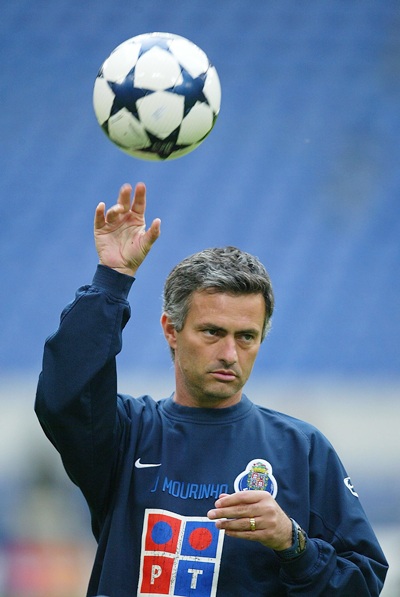
This is one of the aspects Mourinho helped to change the football way of approaching training. Practice what you play. Start with major principles, and then go for sub-principles, sub-sub-principles. One thing at a time, because they cannot take it all at once.


domingo, 1 de novembro de 2015

Klopp - Between the lines

Coaches interviews tell us a lot about how they want their teams to play. If the right questions are asked... and if the coach is open enough about it.

Klopp, after the Chelsea win, showed what he wants Liverpool to do when they have the ball and are trying to build up and create chances.

When you pass the ball between the lines of the opponent, you can *remove* players of the play, and a 10v10+ GK transforms into something way more simple.


Here are some examples of what we are trying to say.


It almost looks easy, right?


quarta-feira, 28 de outubro de 2015

What is happening Wenger?

Not in any case this post must undermine the brilliant win of Sheffield Wednesday yesterday. 

What is happening (or not happening) that is causing so many injuries?

Is it the off training behaviour of the players? Not enough rest, unwise choices in nutrition?

Or does it has something to do with training?


Most of this injuries are not caused by trauma, tackles or high impact contact. The reason has to be something related to what is happening in the training grounds. 

What is up Wenger?

terça-feira, 6 de outubro de 2015

Liverpool Challenge! What would you do?

Liverpool is in need, and you are the one they choose to lead.

What would you do? Keep in mind that we are not looking for a "Football Manager challenge", so the system of play is not that important, the same way that the starting eleven also does not make that much of a difference.

We are looking for game philosofy, what to do in Offensive Organization, Transition from attack to defence, Defensive Organization and Transition from defense to attack.

What would you do in the training grounds to acchieve those goals, what would be your priorities, what kind of players would take advantage and what would you tell the scouts to look for in the transfer market in January.

sexta-feira, 2 de outubro de 2015

Wanna coach? Positioning

While in a training session, one thing you really must pay attention is "where do i stand, during this task?"


How many players does the coach see in this picture?


And in this one? 


See the difference? Coaches, no matter what age, must see everyone.

If you are helping the players to solve a problem (through questioning hopefully) and you can not see 1 player, he will either thing you do not care about him, or he is doing everything right and he has nothing to learn.

How can you tell if someone is paying attention if you can not see them?

Just by positioning correctly you can solve a bunch of problems in practice.


  • As you can see everyone in the pitch, everyone feels engaged in the task. 
  • When you speak, you speak to all of them, because the error that just happened is a team thing, not an individual one.
  • If you are training little kids and your positioning is perfect, parents will not say "the coach likes your son better, and thats why he always plays", plus.. security wise, if you see everyone, is less likely that they misbehave.
  • In practice, if you have your back towards something, without knowing, you are telling that "that something" is not important. Can be a player, can be a goal for them to reach (this happens a lot during ball possession tasks).
Think about it

quinta-feira, 1 de outubro de 2015

Build up: Attract to create space ahead

More and more teams (or coaches) are losing their fear of building up with security, short passes using the goalkeeper as a sweeper, but few have the guts to really use the goalie to attract an oponent to create a 2v1 situation and build from there.

In this video, see how many times the opponents are drawn to the ball, compelled to pressure higher and leaving space in their back.

Ter Stegen vs Leverkusen

sexta-feira, 23 de janeiro de 2015

Goalkeeper Evolution!


Ter Stegen from Football Hunting on Vimeo.

It already begun. The future is here.

Some had tried in the past, but Victor Valdez, Neuer and Stegen are the recent ones.

How can we work during training to "produce" more goalkeepers like this?

quinta-feira, 18 de setembro de 2014

Masterpiece of David Alaba 1x1 Defending

Principles of Defending

 understanding of Delay, Depth, Concentration (Compaction), Balance, Discipline/Patience in the defending phase.

  1. Delay - The ability to prevent the ball from being played forward quickly. A pressuring player needs to reduce the time and space of the attacker to prevent the ball being played forward. This is especially important when outnumbered to allow the team to re-shape to a loss in possession appropriately.
  2. Depth - Reduce the space behind the pressuring player. Provide support in defence. These players do not provide pressure on the ball but instead support the challenging player. Their relative position to the pressuring player is dependent on the situation and part of the field they are supporting the player in. Defensive support is generally much tighter than attacking support.
  3. Concentration/Compactness - The movement of players to concentrate into an area of the field vulnerable to scoring opportunities. Most teams generally drop on loss of possession and recover towards their own goal. Players should make runs back towards their own goal and goal side of the ball if desired.
  4. Balance - In order to cancel the threat of mobility provided by the offense, balance is required by the defending team to retain defensive shape. Balancing is an extension of delay and support. Balancing players provide additional support. Be prepared to leave weak side attacking players unmarked to balance the strong side of the field.
  5. Discipline/Patience - Defending players need to be patient and assess the risk involved in challenging for the ball. A well structured defending line can quickly become disorganized with one rash challenge. Players need to exercise control and restraint and re-adjust their shape to changing scenarios. Players also need to be alert to their surroundings at all times (switched on!).
  6. Predictability - Defensive movements should encourage/force the attacking team to play into certain areas of the field. Channeling play into particular well defended areas or less important areas of the field makes play predictable and increase our chances of regaining possession or decreases goal scoring threats.


This is David Alaba........not your usual Lateral Esquerdo!


Defending Outnumbered


Costa Rica Vs Greece

5v2 and no goal! 

Good defending or poor decision from the attacking side?

Let me know your thoughts!


quarta-feira, 17 de setembro de 2014

segunda-feira, 8 de setembro de 2014

Liverpool Diamond shape out of possession


Brendan Rodgers


Impressive the way that Liverpool work without the ball. The transitions/recovery process  make them a really threat with the pace and skill from their strikers. Notice Ballotelli defending the Tottenham Full back and how hard Ryheem Sterling work without the ball!
Is it enough to  win the barclays premier league? I think he will need to have a plan b for when they play against teams that sit down and defend deep. But there will be plenty of goals this season!!!

Liverpool- Diamond shape in possession!

Brendan Rodgers 


terça-feira, 26 de agosto de 2014

Coach the players to know the game, not only the position they are used to play.

"I have to pay attention to the way my teammates play, even the left and right back or the center backs, because you never know what is going to happen in the game"  
Said Gaitan in an interview to Record


«Thats right. The game is CHAOS. And it does not mater the space or position that you usually play. Modern structures are organized in a way that every player in the right context have to play in "unfamiliar situations". The demand, this way, is that every player has to know the global way of the structure, so that they can relate to each other in every moment, without putting in risk the stability of the organization.»


A while ago, a reader questioned us, in a very smart way, what would be the "road to take" in order to put in play the game principles in the begining of the season. «I think the argument is: would it be better to work on sectorial and intersectorial behaviour, where every player plays their role and just their role, or should we make the entire squad know all the positions in their sector.»

The way we think is « On the other side, if we really want to teach, if we really want that the whole is more than the sum of its parts.. we have to teach the game, not the position. The player has to understand what he does, and why he does it, he should not play "by heart".»

The way, for us, should be, teaching the game the way it is today. If in a game, in a certain point, every player pass through every position in the pitch, then... in the begining of the season (first oficial match) they should know how to behave (in a simply way) accordingly to the zone in the pitch where they stand at the moment, and of course, relating to their teammates. In the end, they should behave the way the game asks for. That is knowledge of the game.

In the video, Coutinho did not realized that, for that moment, he was a left back. And if he did realized, he does not know how a left back should behave in that (apparently simple) situation. 

(You can also see this in portuguese, here)

sábado, 16 de agosto de 2014

Did you asked for drama? Gunners and Spurs win in the last minute

Drama begins today they said...

Here it is.

Eric Dier in his debut. Poor controle of the defensive line, should have been in sync and Dier would either be offside or if they have taken a two steps back (in a line) they would have resolved the problem. Late winner for the Spurs, using a player that was not even in the first eleven in his last club


and Ramsey, also in the last minute. Arsenal played his usual passing game, with good positional play but lacking speed circulating the ball. Its not about how much you run, its about moving the ball faster in order to create problems for the defensive organization of the oponent.


Manchester United changed from night to day, with much much less crossing than the year before, but still lacking consistensy. Mata wins new life in this kind of playing style and United fans can expect some exciting games. With 2/3 more weeks we will be able to see if their deffensive organization is better than the Nederlands in the World Cup. It has to be.. otherwise.. no trophys for the United fans. 

Let the drama begin!